KOPI
Quick login


Login
Documents

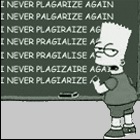
Plagiarism refers to the use of other authors` thoughts, ideas, descriptions, definitions and deductions without any proper citation, reference indicated by the writer.
Plagiarism is the misuse of documents, works of others. Of course, one may and must be familiar with works in the given field and may use thoughts and ideas of others, but never without proper indication of reference and citation. When one fails to give proper citation and reference he/she suggests and states that all the thoughts, descriptions, analysis and deductions in the work originate from him/her, the writer. In countries with advanced scientific life, plagiarism is judged to be equivalent with shoplifting.
The following must be indicated in any written works:
Katalin Szabó in her work "Communication in higher forms" defines what stages plagiarism may have:
Naturally, practice developed its way to prevent plagiarism. The reviewer or lector of the given work is mostly a specialist in the field, familiar with the technical literature of the related works. To judge upon the proper use of technical literature is also part of the lector's task when reviewing. Usually reviewing starts with the evaluation of the technical literature processed. Of course, plagiarism might stay undiscovered, however, when it comes into light-nowadays easier and easier-it ends up with ethical and legal conviction of the writer, rightly so.
Regarding the indication of the name the positive law ( 1999./LXXVI.on intellectual property rights) regulates as follows:
In Hungary the following policies serve as basis:
Source: http://www.magyarfelsooktatas.hu/20.8/15.html Magyar Felsőoktatás - Az Oktatási Minisztérium folyóirata Barakonyi Károly (Barakonyi Károly egyetemi tanár, PTE, Pécs;) Egyetemi csapdák: a plágium veszélyei Szabó Katalin: Kommunikáció felsőfokon Kossuth Kiadó, 1997.
Information plays a great role in everyday life. The number of Internet users are getting higher and higher all over the world, and the development of the Internet made it possible for almost anyone to reach any information. As a result more and more theses, essays and different publications are available, may be even downloaded. However, this fact rises an important question, namely the question of intellectual property rights.
Laws, regulations on intellectual property rights of electronic publications can be found in the following sites.
1999. évi LXXVI. törvény a szerzői jogról
http://www.hpo.hu/szkv/199911/728.html
A szerzői jog és az Internet
http://www.jogiforum.hu
http://www.jogiforum.hu/files/publikaciok/drMurakozi-A_szerzoi_jog_es_az_internet(jf).pdf
Barakonyi Károly - Egyetemi csapdák: a plágium veszélyei
http://www.magyarfelsooktatas.hu/20.8/15.html
Elektronikus publikáció és a szerzői jogok - Bihari Tibor
http://www.mek.iif.hu/porta/szint/tarsad/jog/bihari/bihari.htm
A Pécsi Tudományegyetem Kommunikációs Tanszéken érvényes idézési, hivatkozási
szabályok
www.maya.btk.pte.hu/kom/b/data/plagium.rtf
BME Etikai kódex
http://stratig.bme.hu/intra/etikkod.rtf
BKÁE Egyetemi Doktori Szabályzat
www.bke.hu/altinf/public/doktori_PhD_szab.doc
A Toldy Ferenc Gimnázium számítógép-hálózatának felhasználói szabályzata
http://vega.toldy.sulinet.hu